


Students draft AI rights for schools
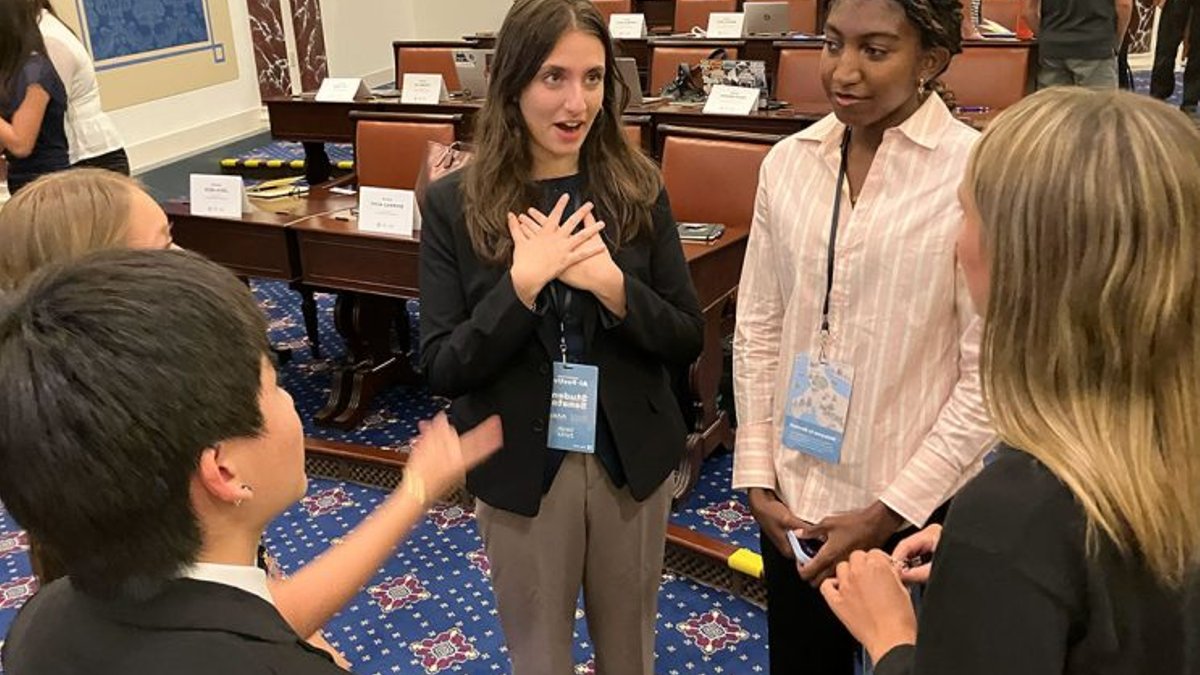
High school students nationwide gathered in Boston to create a set of recommendations to guide how artificial intelligence should be used in classrooms. The weekend event drew 100 students from every state. They debated and voted on principles that will be sent to school districts across the country. Organizers, including an MIT research group and a national superintendents’ association, kept the final text confidential throughout the three-day conference.
Students debate transparency, cheating, and mental health
Their discussions covered a wide range of concerns: academic dishonesty, lack of transparency, AI-generated false information, and the technology’s effects on mental health and the environment. Participants also addressed what one called “cognitive offloading”—the tendency for students to rely on AI to complete tasks rather than developing their own problem-solving abilities.
Related: Teen Athletes Speak Out on Concussions
Ethan Liu, 17, a recent graduate from West Virginia, said the guidelines achieved a reasonable balance. “We set rules so AI can help with brainstorming and studying when used responsibly,” he explained. Liu had used ChatGPT to create practice questions but refused to let it answer test questions for him. “That crosses the line,” he said.
The final vote occurred Sunday in a full-scale replica of the U.S. Senate chamber. Eighty-three students approved the measure, fifteen opposed it, and two were absent. Some called the proposal imperfect—one compared it to “a block of Swiss cheese”—but supported it anyway.
Teachers and students clash over AI’s role
For many participants, the debate felt immediate. Tatiyana Reaves, 16, a rising junior from Fayetteville, North Carolina, said a teacher accused her of using AI after she wrote “whilst” in a paper. The teacher gave her a zero, assuming the word was evidence of cheating. “That’s just how I write,” Reaves said.
Related: EdTech trends shaping classrooms this fall
Other students described a widening gap between educators and learners. Dillian Campbell, 17, from North Carolina, said classmates often photograph assignments and ask AI to complete them. A math teacher at his school told students, “I don’t care if you use AI, but if you fail your test, that’s on you.”
Jaelyn Jensen, 17, from Missouri, argued that middle and high school students should have more freedom to experiment with AI, even if it leads to mistakes. “Teenagers need to learn from their own choices,” she said. Schools, however, must also teach how to use the technology responsibly.
The proposal demands mandatory AI literacy lessons as soon as students begin using devices in class. The curriculum would include not just academic applications but also misinformation, bias, privacy, and environmental costs.
Related: Indonesian Pharmacy System Structure
Jeff Riley, the former Massachusetts education commissioner who now leads the Day of AI initiative, said the technology could transform education by tailoring lessons to individual students. He also warned about bias, deepfakes, and energy use. “This should be a wake-up call,” he said, “but I don’t see enough urgency.”
The recommendations will be published in the coming weeks, but the conversation about AI in schools has only just started.

