


Robot to Join Rural New York Classroom
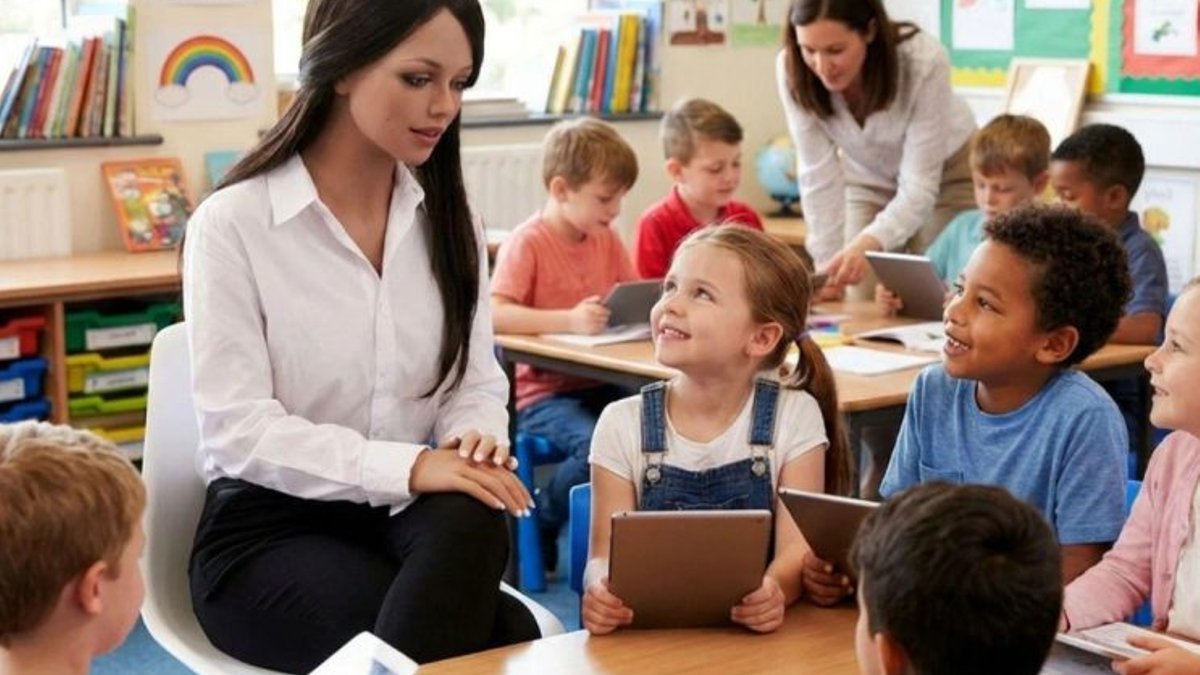
A small school district in rural western New York will become one of the first in the U.S. to introduce a humanoid robot into its classrooms this fall.
The Salamanca City Central School District, located entirely within the Seneca Nation reservation, approved the purchase of a stationary robot named Sally from tech company Realbotix. The device will assist teachers and provide personalized learning support to students without replacing human educators.
How the robot will work in classrooms
Sally has a lifelike appearance with silicone skin and long brown hair but remains seated in a fixed position. It can move its upper body and make facial expressions. Students will interact with the robot using a unique ID code, allowing the system to track progress and tailor responses based on previous conversations.
Realbotix CEO Andrew Kiguel explained that students could say, “Hey, I’m student number 1234,” and the robot might respond, “Hey, we were talking about this yesterday—do you want to continue?” An avatar version will also be available on laptops, letting students upload homework for feedback, generate custom lessons, or receive real-time translations in over 100 languages.
Related: Students draft AI rights for schools
The district will pilot Sally in high school AI and robotics courses using curriculum developed by Apple co-founder Steve Wozniak. If the program succeeds, it may expand to other classes. The robot will also help teachers by offering prompts or guidance if they lose their place during a lesson.
Cost, controversy, and broader debate
The district paid $57,590 for the robot and AI assistant program, a discounted rate since the M-Series model typically starts at $95,000. The decision has drawn mixed reactions. Some view it as a step toward preparing students for a technology-driven future, while others question introducing AI in an underserved community.
The district serves about 1,300 students, with 32% identifying as American Indian or Alaska Native. Superintendent Mark Beehler acknowledged concerns but defended the initiative, saying banning AI outright wouldn’t work. “Students will find a way around most rules,” he said. “It’s critical for schools to teach proper use of technology, not simply exclude it.”
Nationwide, AI’s role in education remains contentious. In May, New York’s largest teachers union called for strict limits on AI and screen time in schools. Earlier this month, New York City Public Schools paused new educational technology purchases until AI guidelines are finalized. The Trump administration previously promoted AI integration, with former President Donald Trump signing an executive order to establish a taskforce on AI in education during his second term.
Pushback reflects broader anxieties about AI’s impact on learning. Educational technology professor Ryan Schaaf said ignoring AI would put students at a disadvantage. “Once they leave school, they’ll be immersed in these technologies,” he said. “Schools should balance AI-assisted learning with traditional instruction.”
Related: Teen Athletes Speak Out on Concussions
State Senator George Borrello, who represents the Salamanca area, called the program an opportunity to level the playing field. “This could help students who can’t afford private tutoring and spark interest in STEM,” he said. He also sees it as a way to ease fears about AI’s role in the workforce. “This is a great way to get kids, teachers, and parents more comfortable with what the future may hold.”
Beehler said the district will evaluate the program’s success through feedback from students and teachers. He emphasized that the goal isn’t to replace human interaction but to support it. “AI and robotics should enhance, not replace, the connections at the center of education,” he said.
The partnership with Realbotix began after a former colleague connected the district with an investor. Beehler initially had reservations but said the company adapted its products for an educational setting. Sally’s deployment this fall will test how humanoid AI functions in real classrooms and whether it can bridge gaps between innovation and equity.
Some students have already begun exploring similar ideas in their own schools.