


Arkansas schools cut costs with electric buses
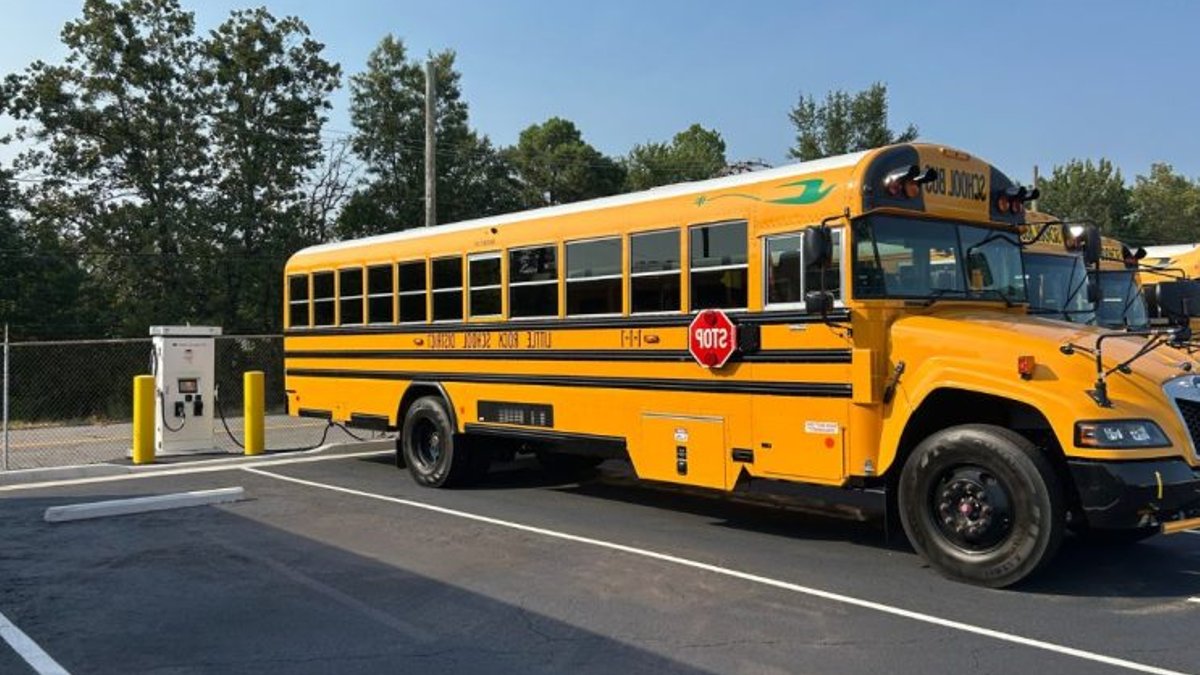
When diesel prices rose from $2.68 a gallon five years ago to over $5.50 this spring, school districts faced financial strain. The increase represented more than just a temporary spike—it reflected a broader trend of energy market volatility that left budget planners scrambling. For districts already operating with limited funds, the surge in fuel costs forced difficult decisions, often at the expense of classroom resources, facility maintenance, or staff compensation. Little Rock, Arkansas, turned to electric school buses as a solution, not only to reduce immediate expenses but also to create long-term stability against unpredictable oil prices.
Cost savings per mile
The Little Rock School District rolled out its first electric school buses in August 2025. The cost difference was clear. Diesel buses required 59 cents per mile for fuel, while the new buses needed only 31 cents. Each bus travels about 10,000 miles annually. At those rates, fueling a diesel bus costs nearly $12,000 a year. The electric version? Around $4,000. The savings accumulate quickly when scaled across an entire fleet. The district avoided the full upfront expense through federal funding from the Clean School Bus Program, which was critical since electric buses have a higher initial price. Without this support, many districts would struggle to justify the capital expenditure, despite the long-term savings.
Savings began immediately. Within the first few months of operation, the district observed a noticeable reduction in its transportation budget. The funds previously allocated to fuel purchases were redirected to other priorities, such as technology upgrades and facility improvements.
Savings that stretch beyond the pump
Other districts have seen similar results. Fleming County, Kentucky, reduced its per-mile costs by 80% after adopting electric buses. The extra funds were used to increase teacher salaries, addressing a persistent challenge in rural education systems where attracting and retaining qualified educators has become increasingly difficult. Beyond the immediate budgetary benefits, the transition also aligned with broader goals to reduce greenhouse gas emissions and improve public health outcomes.
The advantages extend beyond finances. Electric buses produce no tailpipe emissions, improving air quality for students. Diesel exhaust contains fine particulate matter (PM2.5) and nitrogen oxides (NOx), both of which have been linked to respiratory issues, asthma, and other health problems in children. Studies have shown that students riding diesel buses are exposed to higher concentrations of these pollutants than those outside the vehicle, due to the “self-pollution” effect where exhaust fumes re-enter the cabin. Electric buses eliminate this risk entirely, creating a healthier environment for the roughly 25 million children who ride school buses daily in the United States. They operate more quietly and smoothly, offering a better ride. The absence of engine noise reduces driver fatigue and improves communication between students and drivers, while the smoother acceleration and braking enhance comfort, particularly for younger children or those with sensory sensitivities. For children who use them daily, the buses also demonstrate sustainability in action. Many electric buses are equipped with educational displays that show real-time energy usage, giving students a tangible connection to concepts like renewable energy and carbon footprint reduction.
Diesel prices have climbed 58% in the past year. Though electricity costs have risen too, the operating cost gap remains significant. For districts with tight budgets, this difference can determine whether programs stay or go. In many cases, transportation costs are one of the largest non-instructional expenses for school systems, often consuming 5-10% of total operating budgets. When fuel prices spike, districts are forced to make cuts elsewhere, which can lead to larger class sizes, reduced extracurricular offerings, or deferred maintenance on school buildings.
The Little Rock fleet remains small, but early results show promise. The district currently operates a handful of electric buses, with plans to expand as additional funding becomes available. The initial deployment serves as a pilot program, allowing the district to gather data on performance, maintenance needs, and operational challenges. Early findings indicate that electric buses require less frequent servicing than diesel models, as they have fewer moving parts and no need for oil changes, transmission fluid replacements, or exhaust system repairs. This further reduces long-term costs, though districts must invest in charging infrastructure and staff training to support the new technology. Rather than waiting for diesel prices to fall, the district is investing in technology that protects budgets from future oil price swings. The move redirects funds to where they’re needed most: education.
Some rural schools have also begun integrating technology into classrooms. A recent example involves a robot joining a rural New York classroom, offering new ways to engage students. These innovations highlight how districts are adapting to both financial and educational challenges, using technology to bridge gaps in resources and opportunity.

Robot to Join Rural New York Classroom

